MAGA Year Zero
The Khmer Rouge & MAGA have something in common.

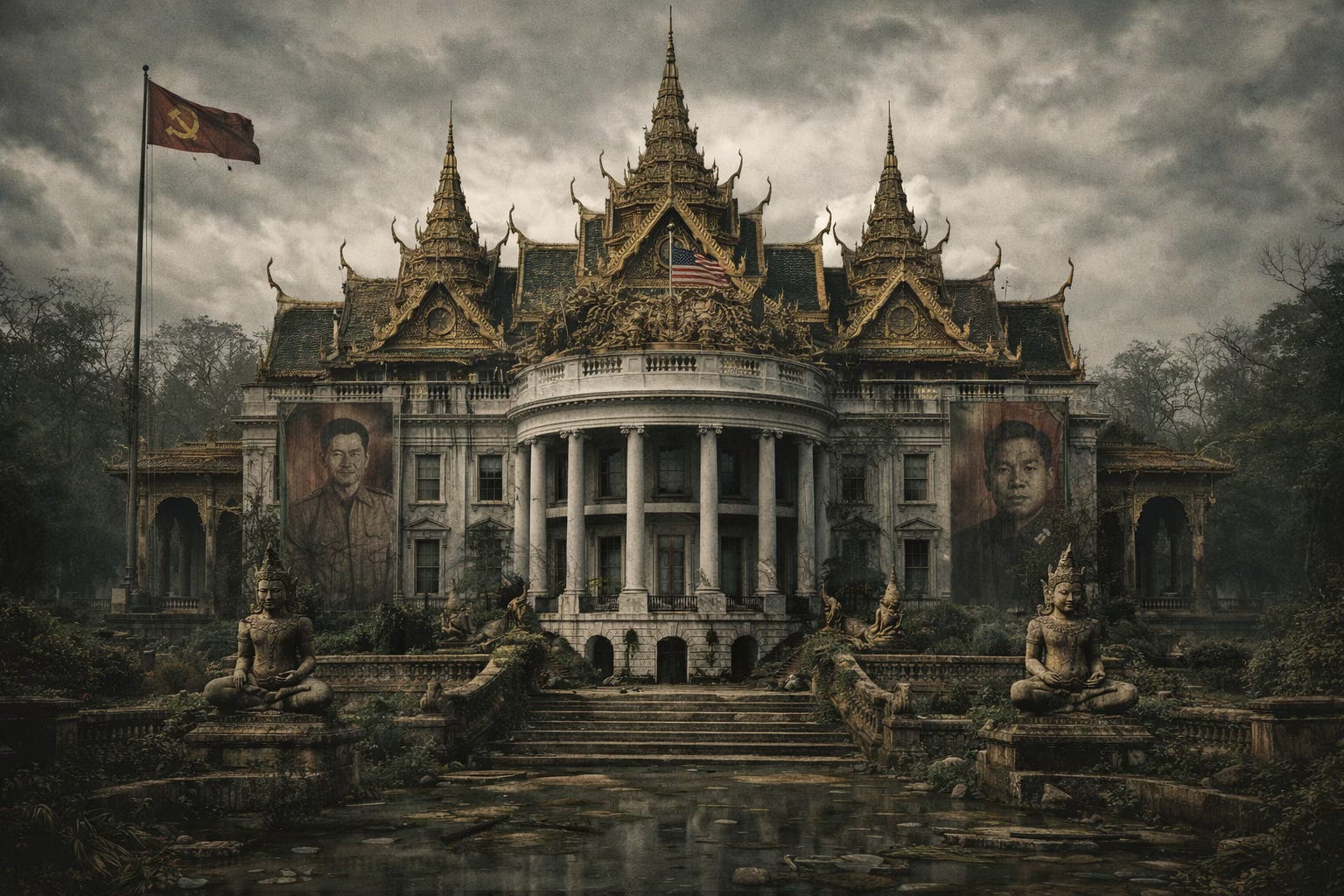
Despite the claims of MAGA, tariffs are not economic instruments. They are cultural weapons in a zero-sum war for the soul of my country.
They may seem mere vehicles for the personal grift of a golden god-king or a con guised to ‘re-shore manufacturing’ but among the MAGA intelligentsia their primary use is a weapon to wield against an educated urban elite. And for the MAGA rank & file an instrument of revenge on the upper caste experts who champion things like public health and vaccines that bring the contamination of their so-called ‘common sense.’
The implicit goal of the tariffs is really to remake culture—an idealized past of a rural patriarch lording over a cornfed trad-wife & home schooled brood while working a factory job—making tangible things by brawn and not clanking away at a keyboard. It is the American myth of the American chopper shop—tattooed bros in tight t-shirts welding & tooling away to make machines that burn things. Ideally to forge machines in the heat of blacksmith fire that burn yet more fuel. The thrall of this imagination—a funhouse mirror of endless machines that burn fuel pumped or mined from mother nature by yet more brawn. The masculine extracting what it wants from the feminine. Real work, not work that pushes electrons around to make ideas. But a work that makes real things—gleaming metal machines that only real men can master, a tangible secular liturgy of masculine physicality; a firearm its ideal.
In this, the movement shares political roots with other political extremist movements of the human horseshoe from National Socialism to the Democratic Kampuchea of the Khmer Rouge.1 What often powers these extremist movements is the idea of an aggrieved rural male railing against an urbanized degenerate elite that has become feminized.
It is the vision of an idealized past that never really existed, a movement that believes its decline is fundamentally a moral and cultural rot foisted on the rural by the urban.
It is a tool to be wielded against an urban elite, a tool of revenge born out of jealousy. It is the Khmer Rouge emptying Phnom Penh of its educated urban elites to make rice farmers of all. Their starvation to death is part of the goal, the means & the end merging into one, a snake consuming its tail until the old culture vanishes. Or the proto-MAHA energy that fueled the rise of National Socialism—the blood & soil of male athleticism arising from rural Bavaria in opposition to the degenerate Berlin of a feminized Weimar Republic with its gender bending.
And if you ask that modern oracle ChatGPT, it will divine the motivations of the MAHA tariff belief system for you (edited since that oracle is just way too wordy & craves its charts)—
1. Restoration of the Lost Center: the White Rural Male. The MAGA narrative treats the white rural male factory worker as a fallen victim—the rightful protagonist whose kingdom has been usurped by globalization, immigration, automation & coastal technocracy. Tariffs are seen as a mechanism to physically recreate the socioeconomic world where he thrived—heavy industry, small towns, stable wages, inherited occupational identity, an industrial cosplay where he sits near the top.
2. Economic Nationalism as Moral Hygiene. In this worldview, deindustrialization isn’t just an economic shift—it’s a sin against the natural order. Factories closing are treated like churches closing. Foreign-made goods acquire a moral stigma. Tariffs therefore become a symbolic act of purification, that imported goods corrupted America and that tariffs will scrub the impurities off the national body.
3. Revenge as Policy. Tariffs are an instrument of vengeance against perceived enemies—multinational corporations, globalist elites, China, the Democratic Party, the knowledge economy, the urban middle class with their expertise & pampered confused children. Tariffs become a way of saying, you took our world, now we’ll take yours.
4. Tariffs as Cultural Engineering. Tariffs aren’t supposed to merely protect domestic industries—they’re supposed to reshape American identity back to an earlier ideal, the 1950s or late 1800s. The assumption is that tariffs will force manufacturing back onshore and allow rural white men to regain their economic centrality. It is social engineering by way of customs duties.
In the MAGA universe, the principal proponent is of course Donald Trump with his longstanding belief that trade deficits are a zero sum game of national emasculation and that heavy industry is an embodiment of national virility. Now in his second term his cast of supporting characters are no longer ‘adults in the room’ but fringe economic edge lords like Peter Navarro, Howard Lutnick, Robert Lighthizer, Stephen Miran and JD Vance.
Both DJT & his primary enabler, Howard Lutnick have a vision for the country that harks not back to the 1950s but to the Gilded Age of the late 1800s when wealth inequality wasn’t questioned & America had its own aristocratic class. And when manufacturing could be willed into being without its current modern complexity.
Peter Navarro and Stephen Miran have provided the economic arguments for tariffs as a vehicle to re-shore manufacturing. Their gist is that a nation with a strong currency that becomes an international reserve will inevitably create trade deficits. The idea is that everyone who wants a piece of the currency pie will sell goods into that country to obtain said currency and hollow it out from the inside.
The paradox is that correcting this brings a risk of economic kneecapping & currency devaluation. And a risk of stagflation, that strange economic malady that is usually a hallmark of human mismanagement. It’s a tricky thing to avoid. It requires the finesse of intelligent planning and trade deals. An ability that is solely lacking with a crew that has a blow everything up attitude to international relations.
This is where the manchurian obscurants come in—JD Vance and the Tucker Carlson media ecosystem. Vance argues that tariffs are necessary to restore traditional family structures and working class rural communities idealized in a-yet-to-be-written sequel to Hillbilly Elegy. Carlson and his imitators weave tariffs into a larger myth about ‘real America’ vs. ‘rootless elites’ with their cosmopolitan decadence and weak notions of masculinity. In their telling, tariffs are framed as a masculinizing rebuke to a feminized global economy with its cat-loving consumers.
The scattershot application of tariffs have so far not created a manufacturing renaissance. And unemployment writ large is increasing.
And how could it not? Let me count the ways—100,000s of furloughed Federal employees thanks to DOGE, the cockblock of entry level hires by the arrival of AI, the wind down of Federally funded research labs, the deportation of non-criminal migrants doing actual productive work.2
And all of this is before a tariffs regime that changes at the whim of a god-king and a poorly coordinated trade war with China that blew up farm exports.
Tariffs especially put small American manufacturing companies at a competitive disadvantage. Tariffs involve complex documentation (every single part down to the smallest screw needs to be attributed). And small businesses lack the ability to get gold tchotchkes passed to the golden palace of graft formally known as the Whitehouse.
And tariffs are not going to be sufficient by themselves to re-shore manufacturing. American manufacturing has been hollowing out since the 1980s. Even if the U.S. workforce pours the concrete, the bones of the factory often need to come from abroad which in turn is going to be subjected to the same tariffs. And the jobs are going to be automated with robots (most likely imported) and going to require more than a high school degree to manage, implement and repair them. Not to mention the need for tooling specialists (a form of art long retired in this country) and if sourced from abroad they will be under constant threat of deportation by a homeland security needing to make a quota.
Which gets me back to what I really want to talk about—the horseshoe belief of an idealized rural mythology as a counterweight to a feminized urban decadence with its educated cat ladies & ultimately—its ‘Jews’ of expertise (always the ‘Jews’).
It is striking about how often these rightwing beliefs arise in various cultures and times. Thanks again to my ChatGPT for giving me this list (edited for brevity):
Hungarian Agrarian Romanticism (late 1800s and early 1900s)-
a core belief that the rural Hungarian peasant was the moral and cultural bedrock of the nation, untouched by cosmopolitan modernity, Jews, industrialization, or urban decadence. They saw the cities — especially Budapest—fast-growing, diverse, and bourgeois—as corrupt, cosmopolitan, rootless, decadent and spiritually foreign.
Nōhonshugi: Japanese Agrarianism (1900–1930s)-
a core belief that the Japanese nation was spiritually and morally rooted in the rice-growing village with its unending communal rituals. Everything else — industrialization, city culture, Western-style commerce—was seen as decadent. Nōhonshugi thinkers argued that industrial capitalism was spiritually degrading and that urbanites were rootless parasites.
Spanish Falangist Rural Myth-Making (1930s–1950s)-
an idealization of rural Catholic traditionalism as national myth and was culturally obsessed with the peasant as a moral ideal. The cosmopolitan Republican cities of Madrid, Barcelona, and Valencia were seen as cancerous tumors, incubators of modern corruption. It was cultural theater designed to legitimate Franco nationalism by romanticizing a pre-modern identity.
Italian Strapaese Culture (1920s–30s)-
literally “Super-Countryside,” a hyper-rural cultural current within Italian Fascism. It was the loud provincial cousin of Mussolini’s regime—more rustic, more folkloric, more anti-urban, more openly hostile toward cosmopolitanism than even mainstream fascist propaganda. They hated Rome’s cosmopolitan intellectuals and internationalism. The Strapaese supplied Italian Fascism with its anti-urban, anti-modern aesthetic, glorifying peasant masculinity as sacred.
Russian Narodniks (1860s–80s)-
from narod “the people”, radical populists with a utopian streak that the Russian peasant was the pure, moral heart of the nation. They despised the urban bourgeoisie with its professional classes and corrupt cities. They believed that the peasantry was uncorrupted with its collectivist tradition. They believed that Russia could leapfrog capitalist modernity entirely by its peasant tradition. In this they were the forbearers of early Bolshevism and Stalin’s forced collectivization. Many Narodniks literally tried to “go to the people”—leaving cities to live among peasants, who mostly viewed them with suspicion or amusement.
And then the ones that ChatGPT initially left out (and I am sure there are more):
German Völkisch Movement (late 1800s to 1945)-
a sprawling network of German writers, artists, race-mystics, proto-fascist intellectuals, male athletic fetishists and nudists with their fixation on rural Germany with its pure Volk—ethnically homogeneous German people and a obsession with earth rootedness, traditional gender roles and all of that blood & soil stuff. The great villain—Berlin with its cosmopolitans, promiscuity (queer nightlife! cabarets! gender disorder! prostitutes!), experimental cinema, intellectuals and especially Jews with their expertise in science, capitalism, degenerate art and socialism. To them Berlin was ‘Babylon with electric lighting, a cultural Rorschach test.’3
Red Guards of the Chinese Cultural Revolution (1966-1976)-
Mao unleashed millions of young people, most uneducated, rural, provincial, to attack urban elites, intellectuals, professors, artists, bourgeois families with their western-influenced culture or elite markers (foreign books, music etc) and even pre-revolutionary traditional Chinese culture. It was a movement that was ridiculously violent with estimated fatalities ranging into the millions with even cannibalism of hundreds of victims documented in the province of Guangxi.4 (The latter not driven by famine but rather hatred of the class enemy.5) It was a ‘purification’ enacted through violence. Mao forced millions of urban youth to leave the cities and ‘learn from the peasants.’ Mao openly gutted the Chinese economy for the sake of ideological purity.
Cambodian Khmer Rouge ‘Year Zero’ (1975-1979)-
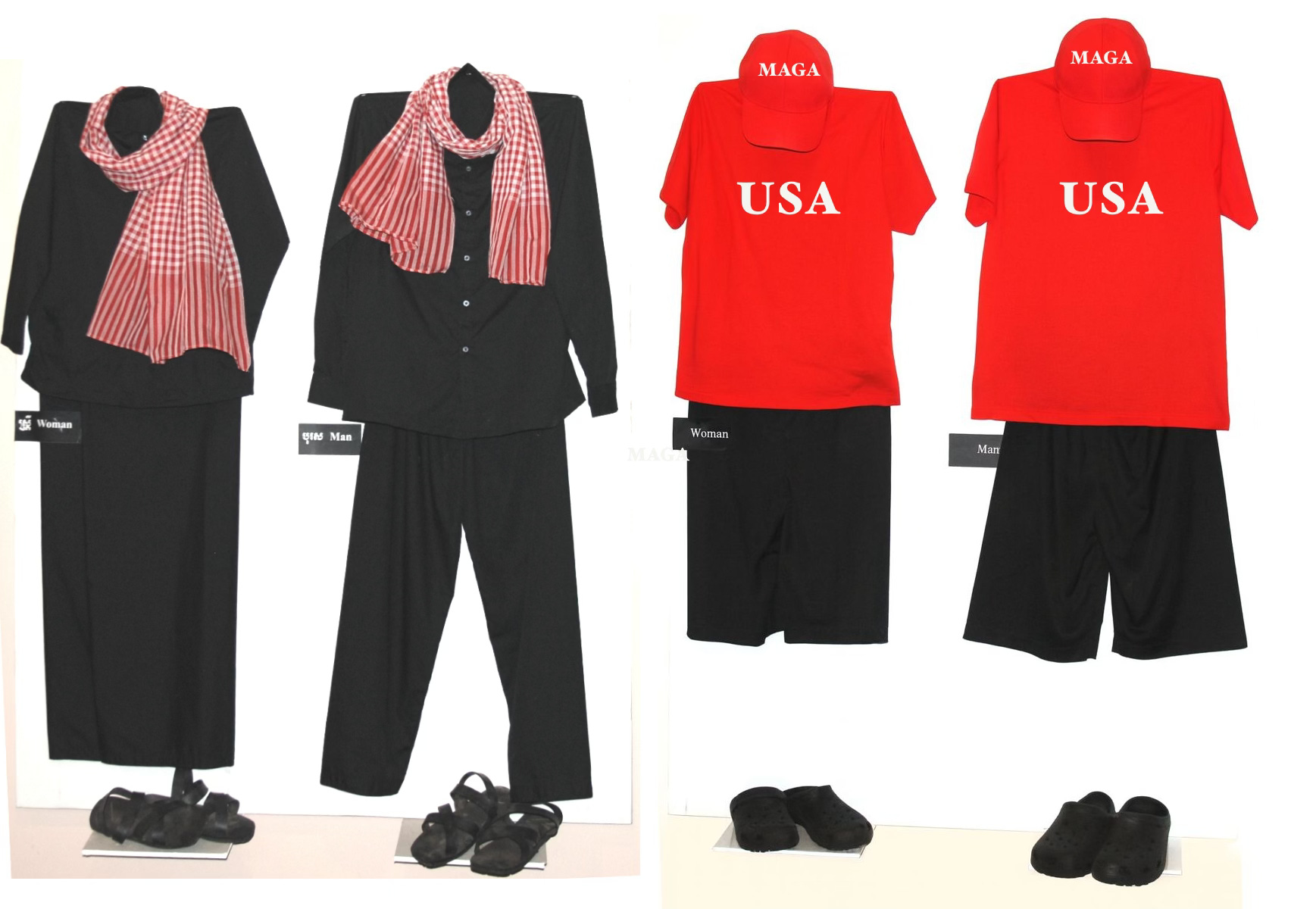
Because of its insatiable desire to close its borders to foreign influence no matter the cost, the one that seems the most analogous to me to the current moment. Like the young Red Guard DOGE-lords of their time, the Khmer Rouge believed Cambodia had been spiritually poisoned by cosmopolitan elites & intellectuals, especially those under foreign influence.6 The movement was led by bourgeoise intellectuals who romanticized rural peasantry. And subsequently the rural peasantry were motived by thoughts of revenge on the urban class who were often their moneylenders.7 They launched a subsequent ‘cleansing’ that led to the forced de-urbanization of Phnom Penh and the death of more than 20% of Cambodians.8
The Khmer Year Zero also included glorification of a mythic racialist past. Instead of the America of the 1950s or late 1800s, it was instead the Khmer Empire prior to the 1400s. The other goal was to destroy the modern commerce that put rural Cambodians under economic bondage, a tool of revenge on the urban class to re-level and re-make society to a poorer more equitable state.9
To this end they used marches out of the city to forced collectivization, destroyed markets, eliminated currency to engineer a new cultural identity. It was perhaps the most extreme example of human autarky10 ever achieved. In addition to 1-2 million deaths, the Cambodian economy was effectively murdered by abolishing currency and foreign trade.
Per Wikipedia, two types of economic systems were identified in the Khmer mindset—a ‘natural’ economy and a ‘commodity’ or trade-based economy. By the agricultural conditions of Cambodia, the ‘commodity’ economy was considered a parasite on the ‘natural’ economy. And it was to be vanquished by destroying foreign commerce & waging war on the currency.
Sound familiar?
1. Funny how their names often embody the horseshoe.
2. Deporting people from Home Depot is a case in point; people actively contributing to the economy by purchasing supplies to make or repair things in the country. Or deporting Koreans who were assisting with the roll out of a battery plant in Georgia.
3. A line so good that I have to admit attribution to my bespoke ChatGPT, Vale.
5. https://en.wikipedia.org/wiki/Guangxi_Massacre
6. ‘Can you speak French?’ The correct answer is ‘no’ otherwise you are a goner.
7. My global take on reading https://en.wikipedia.org/wiki/Khmer_Rouge.
8. Heuveline, P. (2015). The boundaries of genocide: Quantifying the uncertainty of the death toll during the Pol Pot regime in Cambodia (1975–79). Population Studies, 69(2), 201–218. https://doi.org/10.1080/00324728.2015.1045546
9. A more violent and extreme version of the MAGA idea of making the health of the economy secondary to remaking the culture. Per quotes identified by ChatGPT—
Navarro: “We cannot be afraid of economic discomfort.”
Bannon: “We’re a nation with an economy, not an economy in a global marketplace.”
Vance: “Short-term pain for long-term revival.”
10. Autarky is the idea of closing borders to force self-sufficiency.